
Free Shipping (over €99*)


15.01.2025
For the family behind @amatorconnoisseur, their newly built, architect-designed home is the result of years of spatial exploration. A series of different living situations – gradually clarified what truly mattered.
“Over the years that Isak and I have been together we’ve probably moved around ten times. We’ve tried many types of homes – apartments in high-rises and ground level, townhouses in the city centre, functionalist row houses, newly built prefab villas, and turn-of-the-century houses in the countryside. It’s been an advantage, because we’ve been able to really feel what suits us.” – Kajsa explains.
The conclusion was less about style and more about context.
“What mattered most was living in a place that had something to offer in itself – somewhere we felt calm.”
Today, the house stands at the edge of the forest, with a stream running along the property line. Nature is not a backdrop but an active spatial presence – audible, visible, integrated into daily life.




The architectural ambition was clarity: generous ceiling height, carefully considered proportions, and natural materials that age with dignity – wood and stone chosen for longevity rather than trend.
From the outset, lighting was not treated as an afterthought but as a structural element within the space.
“Lamps are the best kind of interior design, and maybe even art, I know. Form is always best and most interesting when it has a function – and lighting can make all the difference to a room.”
The house consists of three interconnected volumes. One of them – referred to as the Forest Room by architect Clara Sjödin – rises nearly five metres high in an oblique, pyramidal form. A sculptural volume that demands a considered lighting response.
A skylight was initially proposed. Technical realities intervened.
“There would always be a small risk of moisture leaking in, and window cleaning has never been my strongest skill – especially not five metres up. So we removed it. But we really loved the idea of having contact with the sky in there.”
Rather than introducing daylight from above, they began exploring how artificial light could articulate the height and geometry of the room without flattening it.


The challenge was not simply to illuminate the volume, but to activate it – to draw the eye upward while respecting the angular complexity of the ceiling.
“Clara and I spent many hours looking at different lamps that could elevate the ceiling without taking away the charm of all the angles.”
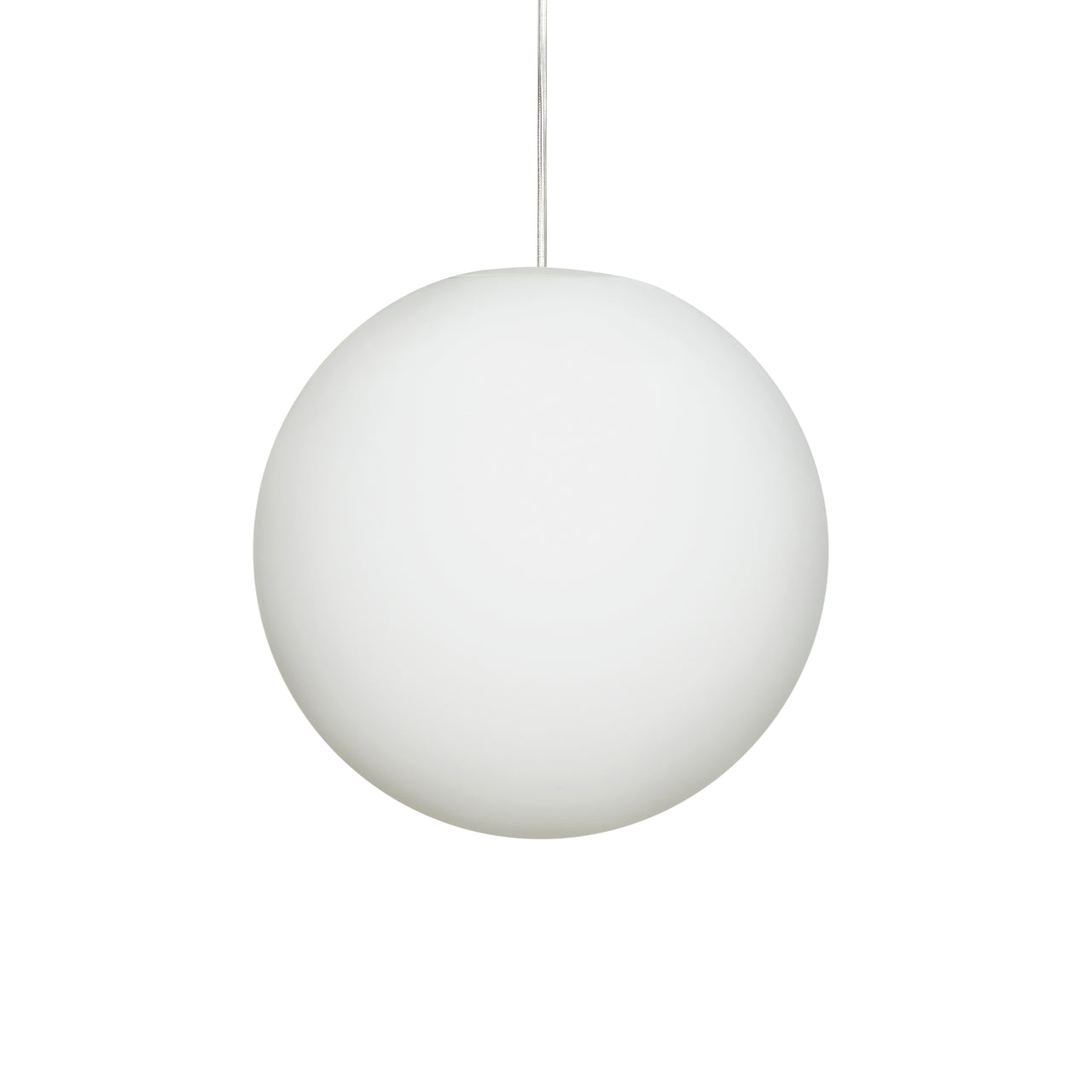
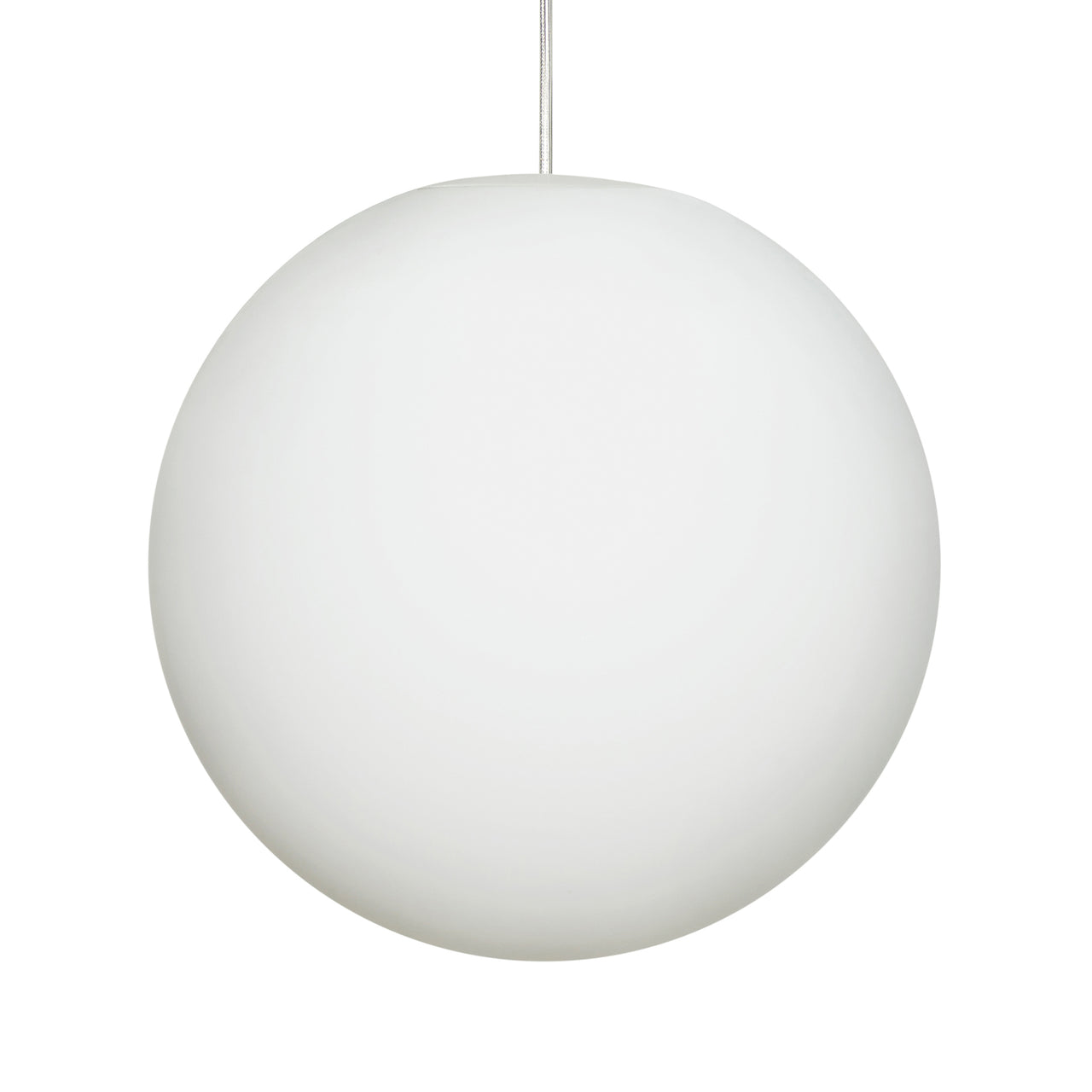
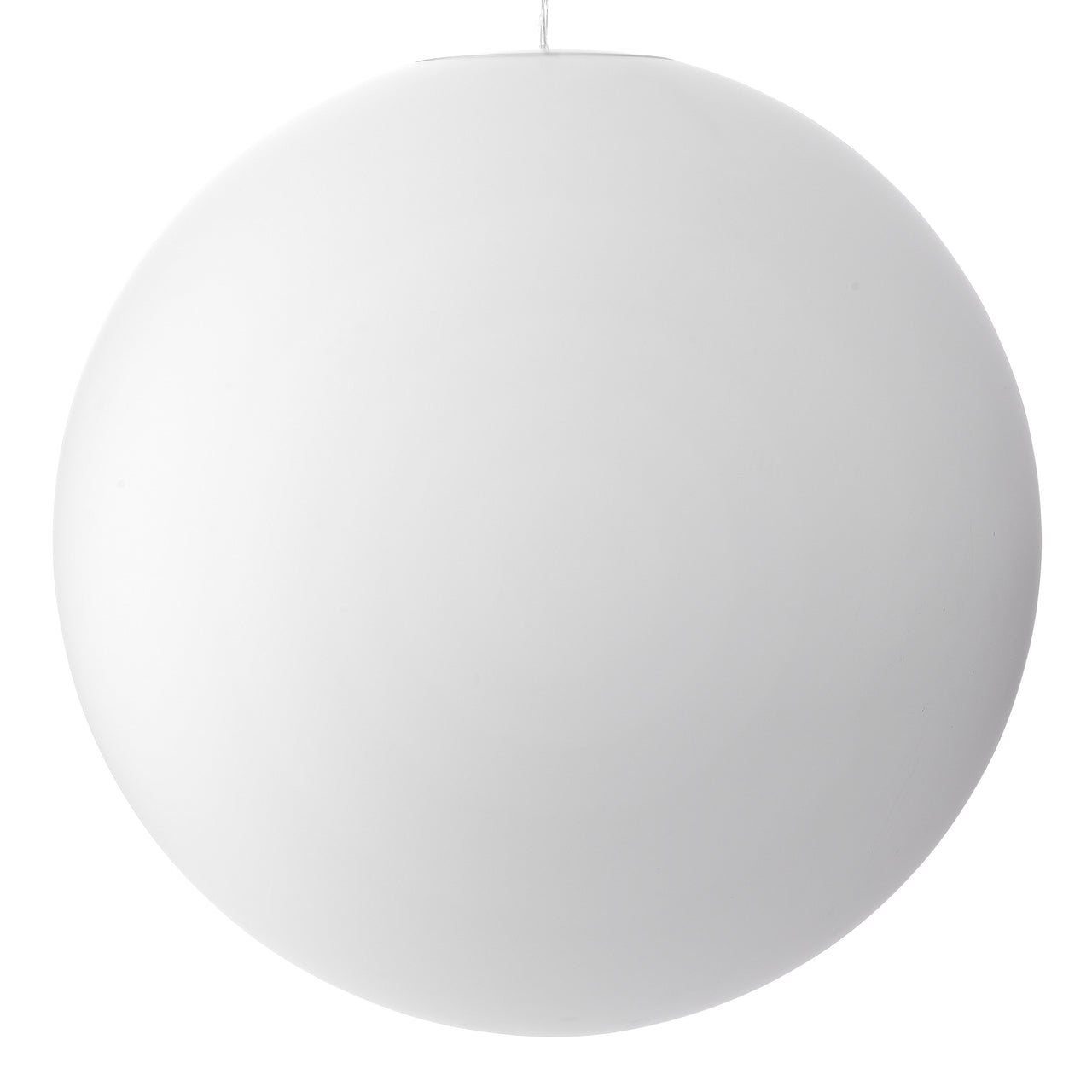
The decision to use Luna Lamp Collection in multiple sizes was deliberate.
“Luna lamps became the obvious solution. The simple, clean design matched the harmonious expression we were striving for perfectly.”…“It became like an installation – together they create the illusion of a moon sky…”
When illuminated, Luna provide diffused, shadow-free light that enhances volume rather than competing with it. When switched off, they remain sculptural elements suspended within the space.
“We usually keep the lamps slightly dimmed in the evenings, whether we’re in the room or not, as the moon sky creates such a beautiful atmosphere and also serves as ambient lighting for the adjoining dining and kitchen area.”
The cluster of Luna Lamps, does not simply provide illumination. It establishes hierarchy, orientation, and mood. It allows the ceiling height to be experienced rather than merely observed.


Join us when we put the spotlight on the creative minds behind Design House Stockholm, offering a glimpse into the ideas and inspiration that shape...
Join us when we put the spotlight on the creative minds behind Design House Stockholm, offering a glimpse into the ideas and inspiration that shape...
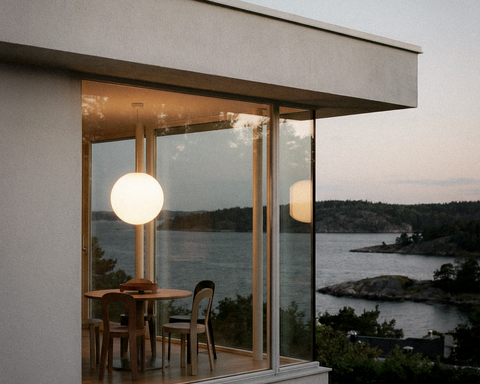
In Scandinavia, light is everything. We live in constant conversation with it — through endless summer evenings and long, dark winters where the su...
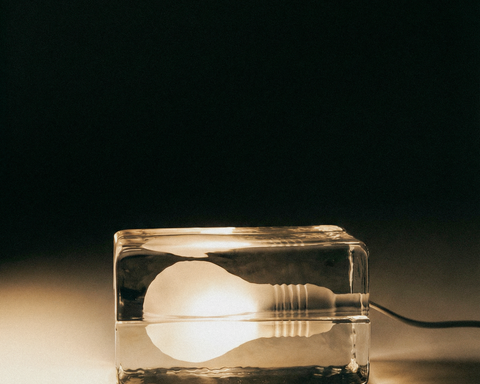
It has been three decades since Harri Koskinen introduced the Block Lamp. What began as a student experiment in Helsinki – casting familiar objects...