

–20%Campaign

22.09.2025
Each month, we spotlight the creative minds behind Design House Stockholm, offering a glimpse into the ideas and inspiration that shape our brand and collection — from the first spark of imagination to the creation itself.
Growing up in his family’s furniture factory, Karl Malmvall followed a natural path into design, studying in Stockholm and Aarhus before beginning a two-decade career at IKEA. His years in Switzerland and Jakarta shaped a practical approach focused on products that work well and are thoughtfully adapted for manufacturing and distribution.


What inspired you to become a product designer, and how did you get started in
the field?
I grew up in Karl Andersson & Söner, the furniture factory my father and his brothers ran. My grandfather founded the company back in 1898. There were always architects and designers around – Børge Mogensen, Yngve Ekström, Bruno Mathsson, Jørgen Gammelgaard, and many others. Even as a kid, I would go along to the Bella Center in Copenhagen, where the annual furniture fair was held at the time.
So, in many ways, it felt natural that I would end up working with design. My path took me to the Aarhus School of Architecture in Denmark. After studying in the furniture department, I was recruited by IKEA and joined their design studio in Switzerland. I spent eight years there, working on projects including collaborations with Verner Panton, before moving on to Southeast Asia for further work with IKEA. In 2001, I moved back home and started my own studio.


Can you walk us through your typical design process from initial idea to final product?
My creative process can start with a product that I feel could have a better solution. It might be a material, a combination of different materials, or even a manufacturing process that sparks an idea.
How do you balance aesthetics and functionality when designing a product?
The balance between form and function is deeply rooted in my background and upbringing. To me, the two naturally go hand in hand, along with a rational approach to manufacturing.
–20%Campaign


–20%Campaign


–20%Campaign


–20%NewCampaign

What obstacles do you face in your work – and how do you work through them?
There are a lot of hurdles and filters before a product is truly finished, and it's probably a good thing – you tweak it, turn it over, run construction tests, and get the price right before it ever hits the market. Patience and persistence are probably the real answer to your question.
Which of your designs are you most proud of, and why?
Definitely the Step Stepladder – a classic that's already been on the market for more than 10 years.

How do you stay current with design trends and innovations in the industry?
At my current job at H&M Home, we work a lot with trends, and because of the connection to fashion, the pace is fast. I think you have to be a bit careful with trends, though – classic, well-made design with functional products lasts, ideally across generations.
Can you share an example of a design that didn't go as planned and what you learned from the experience?
Step Stepladder actually started out as a folding chair, and before it was finished, I presented the stepladder as part of the same family.
The chair never made it into production, but the step ladder did. Maybe what I learned from that was to finish one thing at a time – and make it really good – before moving on to the next.


What role does sustainability play in your design approach, and how do you incorporate eco-friendly practices into your work?
A product should, of course, be physically durable enough to withstand everyday use for many years. From a design perspective, products that don’t shout for attention tend to have more staying power. They can become classics.
Sustainability is also very much about the choice of materials and how efficiently you use them. If a product is used and loved for a long time, its environmental footprint becomes smaller over its lifetime.


What have your collaborations with Design House Stockholm meant to you? Are there any memorable moments from the collaboration you'd like to share?
I think it was during a meeting with Anders about the chair. I already had the step ladder with me, packed flat in a box. When he saw the first prototype, he was convinced: “We have to have this.”
That turned into a long collaboration. I was Head of Product Development at Design House Stockholm for four years, and that experience meant a great deal to me. It also taught me that patience during the development process can be what makes a product last for generations.
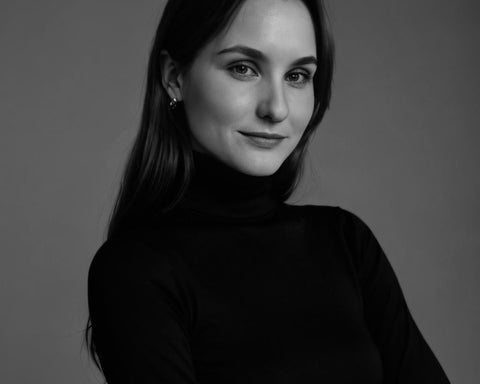
Join us when we put the spotlight on the creative minds behind Design House Stockholm, offering a glimpse into the ideas and inspiration that shape...
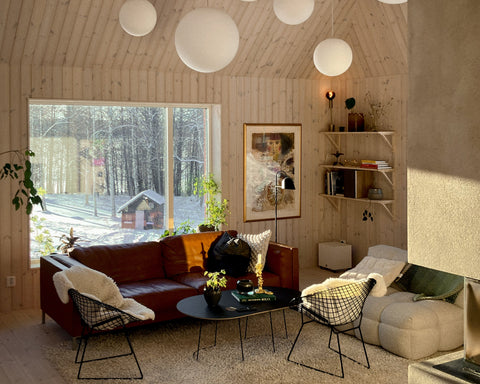
For the family behind @amatorconnoisseur, their newly built, architect-designed home is the result of years of spatial exploration. A series of dif...
Join us when we put the spotlight on the creative minds behind Design House Stockholm, offering a glimpse into the ideas and inspiration that shape...
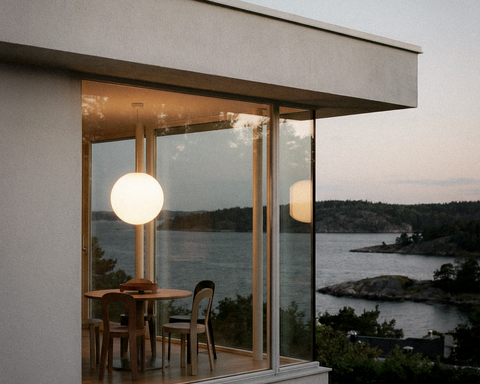
In Scandinavia, light is everything. We live in constant conversation with it — through endless summer evenings and long, dark winters where the su...