
Free Shipping (over 999 kr*)

04.02.2026
This month, we spotlight the creative minds behind Design House Stockholm, offering a glimpse into the ideas and inspiration that shape our brand and collection — from the first spark of imagination to the creation itself.
For his design college graduation exhibition back in 1998, Alexander Lervik at the tender age of 26 had unknowingly hit on what was to become his winning concept. With his exhibition 10 stools 10 decades he had combined concept design, unlikely partnerships and innovations in what turned out to be his way in to the industry. This three-way design approach is defining for Alexander Lervik’s over 20-year career as one of Sweden’s leading designers, whose quest for innovation speaks louder than the passion for creating beautiful objects.
“I rarely get hung up on the details or art-for-art’s sake. What fires me is the desire to create a product based on a novel concept or invention. I see this as my forte, though some might see it as a failing in a designer”, says Alexander.


What inspired you to become a product designer, and how did you get started in the field?
Already at the age of 14, I knew I wanted to work with design. For my final project in high school, I bought an IKEA shelf, cut it apart, and rebuilt it into something new. I then went on to study Italian in Italy, as I had planned to study in Milan, but instead I was accepted to Beckmans College of Design in Stockholm.


What does your creative process look like – from idea to finished product?
It starts with finding inspiration. This can come, for example, from traveling to other cultures, and the effect may appear several years after the journey itself. Performances at Dansens Hus, the opera, or the Royal Dramatic Theatre can also provide inspiration, as can art exhibitions and car shows. Impressions are extremely important.
I then begin researching the project and what already exists on the market in that area. This is followed by the sketching phase and concept development, where I sketch by hand. I then bring the work into the computer, move into 3D software or AI programs, and go back and forth between sketch and finished product between five and ten times. After that, I 3D-print scale models, and if they work well, I build a full-scale prototype. A lot happens at this stage—often dimensions are off—so after several full-scale models, the product is finalized.
How do you balance aesthetics and functionality when designing a product?
It depends entirely on what kind of product it is, which target group it’s for, and who the producer is. If the product is intended for commercial sale, the combination of form and function is extremely important. A collectible design object does not necessarily need to have a function at all.





What are some of the biggest challenges you face during the design process, and how do you overcome them?
I believe the climate issue is the biggest challenge in my work today. The world does not need more products, yet my job is to create new ones. For a long time, I felt lost, but I have now come to the conclusion that the greatest environmental contribution I, as an individual designer, can make is to create products that last and are kept for generations. That is far more important than simply choosing an environmentally friendly material—though, of course, the combination is ideal.
To achieve this, I’ve realized that I need to strengthen my brand in the secondary market so that the value of my design objects increases at auction houses and secondhand stores. Users take better care of products they know have value. Most importantly, I choose producers who manufacture with quality, so that my great-grandchildren can use the chair I once designed.


Which of your designs are you most proud of, and why?
There are several products I’m proud of in different ways. If I had to choose one, it would be my red chair, produced in an edition of ten and acquired for the permanent collections of the National Museum in Oslo, the Nationalmuseum in Stockholm, and the Röhsska Museum of Design.
How do you stay up to date with new trends and technologies?
That’s somewhat my signature. I was among the first to adopt both LED technology and 3D printing, so I’ve always had a curiosity for new technology. Now AI is taking over, and I have already replaced both my employed design assistant and interns with my own AI GPT.


What role does sustainability play in your design approach, and how do you incorporate eco-friendly practices into your work?
Sustainability is now an integral part of the design process and is included in every project I do. I approach it somewhat differently than the mainstream, because the issue is so complex that it requires alternative ways of thinking.
As an example, I often refer to LED technology, which saw major development when Germany decided to shut down its nuclear power plants and the EU then decided to replace older lighting technology with LED, which was highly energy-efficient. Today, 20 years later, NASA’s photographs of the Earth show that the amount of light has increased in proportion to the energy savings LEDs provided—simply because light is cheaper today. The end result was a 0% difference in consumption, but we have manufactured far more light fixtures.
The same applies to wood. The entire design and architecture industry is currently moving in the same direction, viewing wood as the solution to climate problems. At the same time, the EU says we should not log forests because they are needed for carbon sequestration. These two directions don’t fully align. What I want to say is that, as consumers, we need to reflect on these issues from a broader perspective.


Have you ever experienced a project that didn’t go as planned? What did you learn from it?
I was the lead architect for Stureplansgruppen and designed the interiors of their nightclubs in the early 2000s. These were extremely fast-paced projects, so many mistakes were made. The beautiful orange, monochrome carpet at the Whiteroom nightclub had to be replaced after the very first night, as spilled drinks and slush turned it black. The bar counter at Sturecompagniet was supposed to feature a waterfall that never worked, because it was slightly uneven and all the water ran into one corner.
What has the collaboration with Design House Stockholm meant for you as a designer? Has this partnership influenced your creative process and professional growth in any way?
Design House Stockholm has made a remarkable journey during its years on the international design scene. Based on my conclusions around the climate issue, brands that create iconic design products with long-lasting quality are the real winners. These are objects people keep for generations and that retain their value on the secondary market.
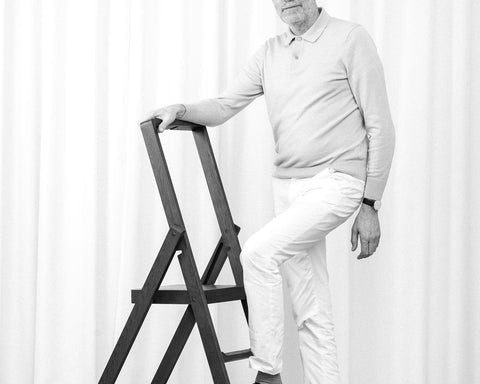
Join us when we put the spotlight on the creative minds behind Design House Stockholm, offering a glimpse into the ideas and inspiration that shape...
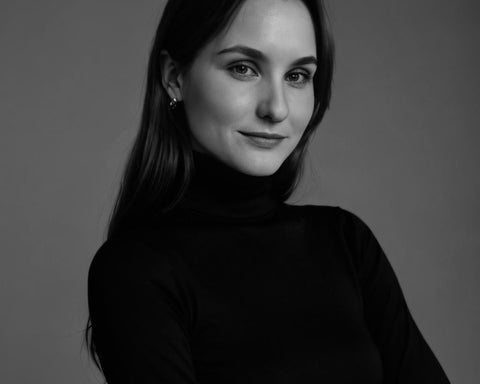
Join us when we put the spotlight on the creative minds behind Design House Stockholm, offering a glimpse into the ideas and inspiration that shape...
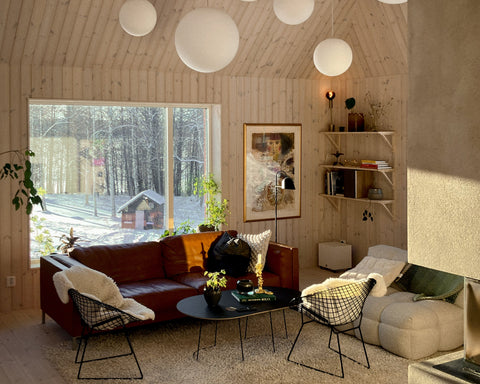
For the family behind @amatorconnoisseur, their newly built, architect-designed home is the result of years of spatial exploration. A series of dif...
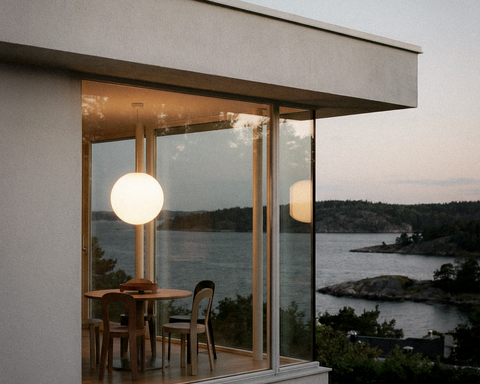
In Scandinavia, light is everything. We live in constant conversation with it — through endless summer evenings and long, dark winters where the su...