

New
Free Shipping (over 999 kr*)


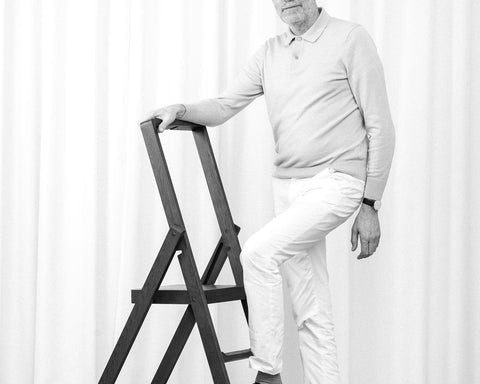
Left - Isa Andersson Right - Photo: Steinsland Berliner
New
15.05.2026
Today we spotlight one of the creative minds behind Design House Stockholm, offering a glimpse into the ideas and inspiration that shape our brand and collection — from the first spark of imagination to the creation itself.
Designer Isa Andersson moves between art and design with sculptural objects that challenge conventions of beauty, power, and identity. From tactile rope ladders and spiked glass to her acclaimed Hydraulic Vases, her work combines raw materiality with a bold, provocative aesthetic that has been exhibited internationally in Stockholm, Milan, and Tokyo.
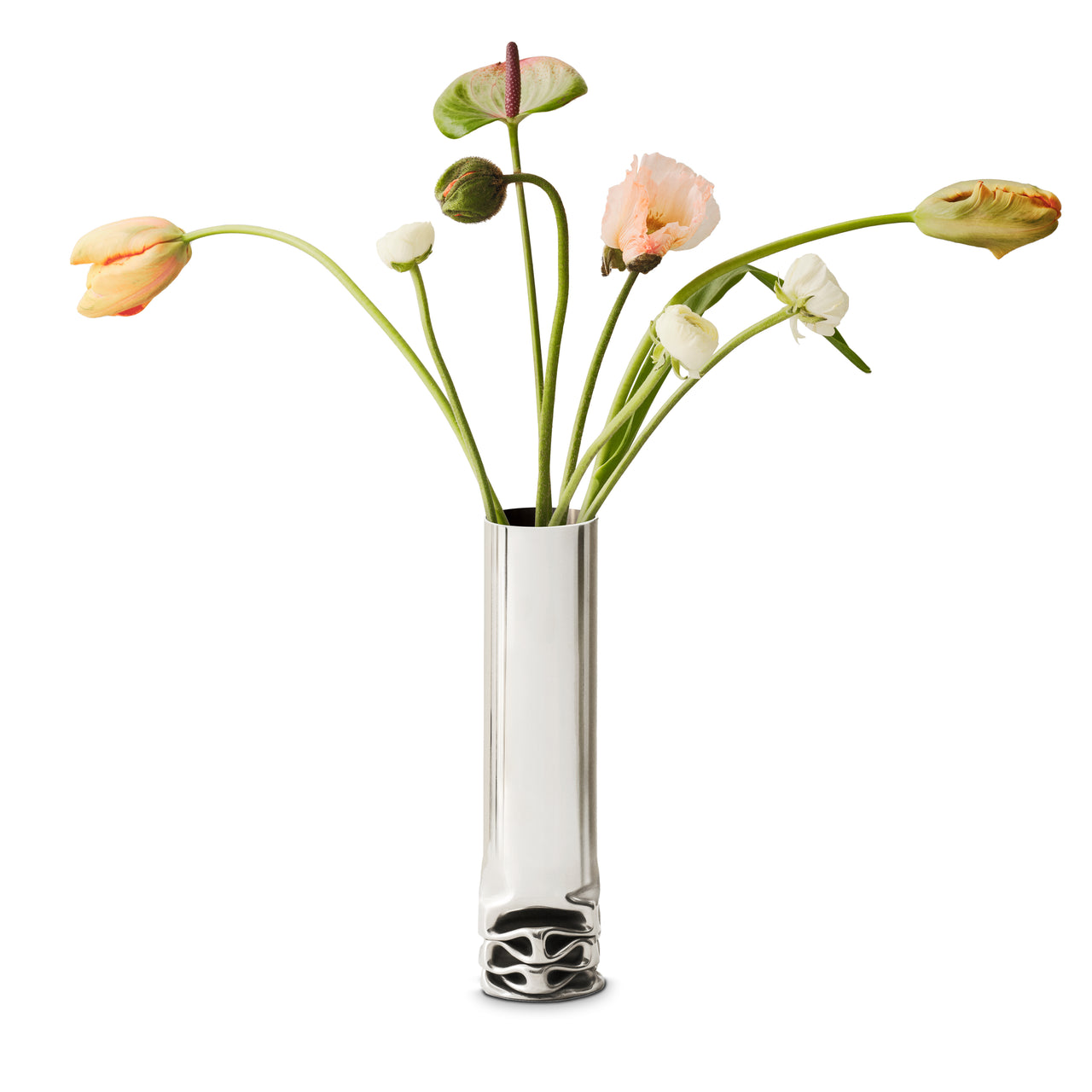
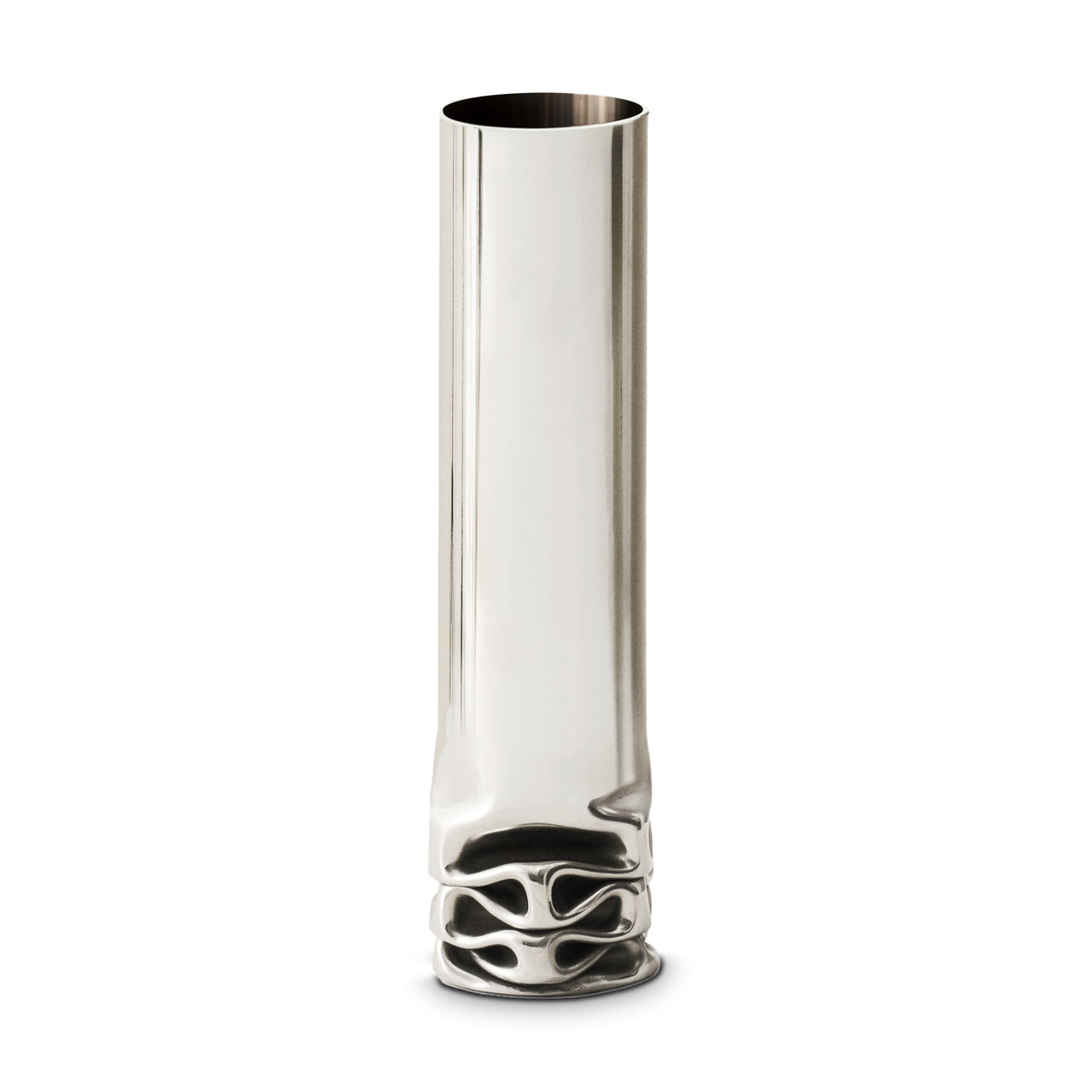
Since graduating from Beckmans School of Design in 2016, Isa Andersson has established herself as one of the most distinctive voices in contemporary Scandinavian design. She later continued her studies at Konstfack, where she developed her master’s project Hydraulic – the sculptural vase series shaped from stainless steel using a hydraulic press.
"I became fascinated by all the videos showing what you can do with Hydraulic presses," Isa Andersson recalls. "Usually, you extract ball bearings, but you can do anything!"
Together with fellow student Johan Krantz, they toured auto repair shops all over Stockholm searching for tougher equipment than the school could offer.
"They recognized our need for a stronger press, but we had a hard time explaining our quest."
Once they got onboard, the difficulty stood in how to preserve the form and control the deformation of the base.
"It's a challenging process; you have to be skilled in mathematics. If you change the thickness of the material by just a millimeter, then you have to recalculate the entire process before you dare apply pressure.”


What inspired you to become a product designer, and how did you get started in the field?
As I grew up, I started to realize that I thought a little differently than other kids – especially when it came to problem-solving and imagination. I don’t have many memories from my early childhood, but certain moments stand out clearly. I remember, for instance, how much I loved the yellow and purple combination of the game pieces in a Bamse board game.
I was also fascinated by small details others might not notice – like a plastic food container at a friend’s house. I had never seen one before and couldn’t understand its purpose. At home, we simply poured cereal straight into the bowl – wasn’t that how everyone did it? Or was it?
From an early age, I understood that my home wasn’t quite like others. We didn’t use plastic containers for cereal, but we once painted my dad’s entire car with a paintbrush – and had a blast doing it.
I later studied at Beckmans College of Design and went on to complete my master’s at Konstfack, graduating in 2019.
Photo: Marcus PG Gustavsson AD: Johanna Sterling
Can you walk us through your typical design process from initial concept to final product?
I usually just go about living my life – meeting people, observing the world around me with a curious eye. I’ve developed a kind of "filter" I can switch on and off, depending on whether I’m in work mode or not. When I need inspiration, I can activate that mode, but I also know when to turn it off so I can focus on other things. Otherwise, it becomes overwhelming.
Often, it’s the small irritations or unexpected fascinations that spark ideas – anything that slightly expands my view of the world tends to get me going.
Like walking into a hardware store and discovering tools or parts I have no idea how to use—that’s when my curiosity really kicks in.
For me, the process usually involves more thinking and talking than sketching and prototyping—until it naturally leads into the making phase.
How do you balance aesthetics and functionality when designing a product?
By believing that aesthetics are the function :)


Which of your designs are you most proud of, and why?
Right now, I’m incredibly proud that the National Museum in Stockholm has acquired two of my sculptures to become part of their permanent timeline. My work will be included in what they describe as "contemporary design in Sweden" – which I think is pretty cool!
The pieces referred to are the bowl After You and the sculpture/key Home Sweet Home.


How do you stay current with design trends and innovations in the industry?
Curiosity and despair are often the forces that drive me forward. I also believe it’s important to place yourself in unfamiliar environments – it’s in those moments that new insights and broader perspectives emerge.
Can you share an example of a design that didn't go as planned and what you learned from the experience?
Many people assume my glass pieces are meant to be inserted into the body for intimate purposes. It’s a question I get surprisingly often on social media – especially from men. :/

What role does sustainability play in your design approach, and how do you
incorporate eco-friendly practices into your work?
Since I primarily work with art, I don’t often reflect too deeply on material sustainability. It feels like you can get away with a lot more when everything is conceptual and small-scale. In more large scale production I leave the sustainability aspect and responsibility to the producer.

What has the collaboration with Design House Stockholm meant for you as a designer?
It has been amazing!
Since I no longer had the capacity to produce the Hydraulic Vase myself in my studio, this collaboration became absolutely vital – otherwise, the vase would have been discontinued. I’m incredibly grateful for that. And working with such a great team has also taught me a lot about how to capitalize on my creative skills across different fields! :)


Join us when we put the spotlight on the creative minds behind Design House Stockholm, offering a glimpse into the ideas and inspiration that shape...
For the family behind @amatorconnoisseur, their newly built, architect-designed home is the result of years of spatial exploration. A series of dif...
Join us when we put the spotlight on the creative minds behind Design House Stockholm, offering a glimpse into the ideas and inspiration that shape...
In Scandinavia, light is everything. We live in constant conversation with it — through endless summer evenings and long, dark winters where the su...